Author: Strong-Admin

  • Welcome to the Crucible

    Welcome to the Crucible

    Pour yourself a warm flat white and take a moment to breathe, because there are seasons in life that feel less like a gentle stroll and much more like a furnace. We’ve all been there—wondering why our prayers for changed circumstances seem to bounce off the ceiling, or why the pressure just keeps rising instead of easing off.

    Grab a seat, because today we’re leaning into the honest, everyday reality of walking with God through the heat.

    Series Synopsis:

    Welcome to The Crucible — a Coffee With Phil series.

    What if the seasons we most want to escape are the very seasons in which God is doing some of His deepest work in us?

    We don’t have to love the heat, pretend the pain doesn’t hurt, or understand every twist in the process.

    But we can learn to trust the Purifier, surrender ourselves to His work, and allow our lives to become increasingly reflective of His character.

    This is an invitation to transformation, to surrender, and to discover what it means to become more like Jesus.

    Let’s step into the crucible together.

    Key Takeaways

    • The Prize is the Purifier: God isn’t just trying to get us out of tough spots; He uses those exact seasons to draw us closer to Himself. The ultimate prize of our faith journey is the One walking through the fire with us.
    • Circumstances Aren’t the Enemy: The heavy season or the intense pressure isn’t out of control. It is simply the environment—the crucible—where God does His deepest formation work.
    • Confronting the Inside, Not Just the Outside: While we spend our energy praying for our external problems to vanish, God is gently and purposefully addressing our internal self-reliance, pride, and need for control.
    • The Refiner is Intentional: Unlike a wild forest fire, our Refiner leans closely over the heat. He has a deliberate, loving intention to skim off the impurities so that His character can shine through us.

    Homework & Action Steps

    Take this week’s theme into your personal quiet time, prayer chair, or morning walk with God. Sit down with Malachi 3:1–4 and reflect honestly on these four questions:

    • What is the crucible I currently find myself in?
    • What am I most desperate for God to change?
    • What might God be revealing about my dependence, my pride, my expectations, or my need for control?
    • What would faithfulness look like if my circumstances didn’t change this week?

    A Simple Prayer: “Lord, I don’t necessarily understand this season. I don’t pretend to enjoy the heat. But I want to trust You as my Refiner. Show me what You are forming in me. Teach me to surrender what I cannot control, and make me more like Jesus. Amen.”

    Resources & References

  • The Power Couple

    The Power Couple

    Have you ever wondered how personal promptings from the Spirit connect to the unchanging pages of the Bible? In our spiritual journeys, we often treat personal insights and written scripture as two entirely separate worlds. But when we look closer at how God communicates, we find a dynamic, living loop that transforms how we live out our faith every single day. Pour yourself a warm flat white and pull up a chair as we explore how this powerful pair works together to anchor us when life gets unpredictable.

    In part four of our series on faithfulness, we dive into what happens when a personal whisper from God (rhema) sends us scurrying back to test and ground ourselves in Scripture (logos). This isn’t about rigid academic lecturing or ticking off religious checklists; it is about an unhurried dialogue where God’s written word speaks fresh life right back into our real, everyday circumstances. When we understand how this power couple operates, our spiritual walk stops depending on fleeting emotional highs and starts resting on a solid, living foundation.

    If you have been feeling stuck in a routine or disconnected from your daily quiet time, this conversation offers a refreshing perspective. Grab your favorite mug and join us for an honest look at how letting the Living Word shape our inner world changes everything about how we show up in the world around us.

    Key Takeaways

    • The Living Loop: Genuine spiritual growth happens when personal promptings (rhema) send us back to test and ground ourselves in Scripture (logos), creating a continuous, living dialogue.
    • Beyond Academic Lecturing: Walking with God is an interactive relationship where the written word speaks personally back into our everyday reality rather than remaining a distant textbook.
    • Anchoring the Inner World: Allowing Scripture to inform our daily lives keeps our spiritual stability intact even when our emotions and external circumstances fluctuate.
    • Faithfulness in Practice: Maturing as a Christian means moving past emotional performance and embracing the unhurried rhythm of listening, testing, and walking steady.

    Homework / Action Steps

    Hi there and welcome to Coffee with Phil, where our goal is to help you live a life of purpose, on purpose.

    Walking with God sounds easy, but how many of you know it never follows the script you prepared?

    In this podcast, Phil shares stories from his personal journey in the hopes that his experience – the good, bad and the ugly – will help you as you walk with God on your own journey.

    Grab your coffee and enjoy this practical and personal episode with your podcast host, Phil Strong.

    Check out more from Phil at https://philstrong.com

    Resources & References

  • Steadfastness

    Steadfastness

    When life throws unexpected changes our way, it is easy to let our daily spiritual rhythms slip, waiting for motivation to return before we engage. But walking with God was never meant to be dictated by how we feel when we wake up in the morning. In part three of our series on faithfulness, we look closely at what it means to cultivate true steadfastness—remaining planted and immovable even when the surrounding season feels dry, uncertain, or uncomfortable.

    Continuing our exploration of the Hebrew root word Aman, we discover that steadfastness isn’t about white-knuckling our way through spiritual disciplines or manufacturing false enthusiasm. Instead, it is about the quiet, unglamorous art of showing up. When God whispers a word (rhema) that sends us back to anchor ourselves in the written text (logos), it creates an active, living dialogue that reshapes our inner world. True maturity in our walk with God is built brick by brick in the ordinary, everyday moments where we choose to stay anchored rather than drifting with every passing emotional tide.

    If you have been feeling weary or wondering how to maintain momentum when the initial spark fades, this conversation is for you. Pull up a comfortable chair, pour yourself a fresh flat white, and let’s talk about what it looks like to trade emotional rollercoasters for steady, enduring steadfastness in our daily lives.

    Key Takeaways

    • Steadfastness over motivation: Waiting to feel inspired before showing up in your faith will leave you stuck; real growth happens when you choose to stay planted regardless of your mood.
    • The deeper roots of Aman: Building on our study of the Hebrew root for faithfulness, steadfastness represents structural integrity—remaining a reliable pillar when pressure mounts.
    • The living loop of scripture: Letting personal promptings (rhema) drive you back into the grounded truth of the Bible (logos) keeps your spiritual life vibrant and anchored.
    • Maturity in the mundane: The most profound transformation often occurs in the quiet, unglamorous moments where you simply remain faithful to your daily routine with God.

    Homework / Action Steps

    Hi there and welcome to Coffee with Phil, where our goal is to help you live a life of purpose, on purpose.

    Walking with God sounds easy, but how many of you know it never follows the script you prepared?

    In this podcast, Phil shares stories from his personal journey in the hopes that his experience – the good, bad and the ugly – will help you as you walk with God on your own journey.

    Grab your coffee and enjoy this practical and personal episode with your podcast host, Phil Strong.

    Check out more from Phil at https://philstrong.com

    Resources & References

    • Scripture & Word Study: The Hebrew root word Aman (steadfastness, stability, and enduring faithfulness)
    • Podcast Episode Link: Listen to CWP.184 on Buzzsprout
  • Why Am I So Tired When I Still Believe in God?

    Why Am I So Tired When I Still Believe in God?

    I was sitting in a chair by the window when I realised something that I hadn’t really wanted to admit.

    I was tired.

    Not just I need an early night tired. Not I’ve had a busy week tired. I mean tired somewhere deeper. The kind of tired that doesn’t seem to disappear after a good night’s sleep.

    And the strange thing was, I still believed.

    I believed God was good.

    I believed He was faithful.

    I believed His promises were still His promises.

    I believed the things He had spoken to me.

    I hadn’t stopped praying.

    I hadn’t stopped hoping.

    I hadn’t walked away.

    So why was I so tired?

    That question bothered me. Because somewhere along the way I had absorbed an idea that perhaps many of us have absorbed: If my faith is strong enough, I shouldn’t feel this exhausted. But what if that’s not true? What if being tired doesn’t necessarily mean your faith is failing?

    What if sometimes you’re tired because you’re still carrying your faith?

    Hope isn’t always light

    We often talk about hope as though it’s something light.

    Hope lifts us.

    Hope inspires us.

    Hope gives us wings.

    Hope is the sunrise after the darkness.

    Hope is the helium balloon floating above us.

    But I’m beginning to wonder whether biblical hope is much heavier than that. Because hope asks us to believe in something we cannot yet see. It asks us to carry a future we cannot yet hold. And that can be exhausting.

    I’ve come to think that hope has more in common with an anchor than a helium balloon.

    An anchor isn’t useful because it’s light. Its usefulness comes from its weight. It holds. It keeps something from drifting away. And perhaps there are seasons when the heaviness we’re feeling isn’t evidence that something has gone wrong. Perhaps the weight is evidence that something is still alive.

    A dead hope doesn’t weigh anything. Only a living one does. That’s one of the strange things I’ve been learning. Hope has weight. Hope can make your arms ache. Hope can leave marks on your shoulders.

    And sometimes the hardest part isn’t believing that God can do something.

    It’s continuing to believe when you don’t know when He will.

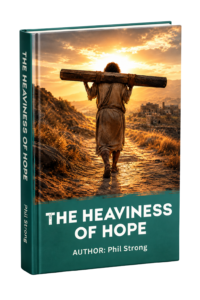
    If this speaks to you, you may like to check out the first chapter of my book, The Heaviness of Hope. I mean, you can buy the book; just click the title.

    Or, you can read the first chapter for free here: Hope Sample.

  • God Is Faithful

    God Is Faithful

    Have you ever reached a season in your walk with God where your emotional tank felt completely empty? You show up for your daily quiet time, you say your prayers, but the warm feelings of closeness just aren’t there. It is easy in those moments to wonder if you’ve taken a wrong turn or if your faith is somehow faltering. But when we look at the dynamic of walking with God, we quickly realize that our feelings were never designed to be the foundation of our spiritual stability. In this second part of our series on faithfulness, we step past the emotional rollercoaster and look at what happens when we anchor our lives in something far more durable than a passing mood.

    On a morning walk, when asking God about direction for this next season, the answer wasn’t a complex roadmap—it was a single Hebrew root word to go study: Aman. This root carries the weight of stability, steady support, and standing firm like a reliable pillar that refuses to buckle under pressure. Understanding Aman shifts our focus away from how we feel about God on any given Tuesday and puts it squarely on who God is every single day. When our emotions ebb and flow, His character remains immovable. True spiritual maturity begins when we learn to lean our entire weight onto His unyielding faithfulness rather than our own fluctuating energy.

    Living this out is an ongoing, unhurried dialogue between rhema—the personal word whispered to your heart—and logos—the grounded truth of Scripture. A personal word sends us back to test and ground ourselves in the Bible, and as we sit with the Bible, it speaks fresh life back into our daily walk. If you find yourself navigating a quiet or dry season right now, rest assured that God isn’t missing. Grab your favorite brew, sit down with us, and let’s explore how leaning on an unchanging God changes the way we show up in our everyday lives.

    Key Takeaways

    • Faithfulness rests on God’s character, not our emotions: Shifting our reliance away from emotional highs allows us to build a steady, enduring faith that survives dry seasons.
    • The anchoring power of Aman: The Hebrew root for faithfulness reveals God as a solid, reliable pillar who remains completely steadfast when our circumstances shift.
    • The living loop of Rhema and Logos: Genuine spiritual growth happens when personal promptings from the Spirit send us back into Scripture, allowing the Bible to inform and shape our daily reality.
    • Maturity in the ordinary: Showing up faithfully in quiet, unglamorous moments is where deep spiritual muscle is built, proving that stability beats performance every time.

    Homework / Action Steps

    Hi there and welcome to Coffee with Phil, where our goal is to help you live a life of purpose, on purpose.

    Walking with God sounds easy, but how many of you know it never follows the script you prepared?

    In this podcast, Phil shares stories from his personal journey in the hopes that his experience – the good, bad and the ugly – will help you as you walk with God on your own journey.

    Grab your coffee and enjoy this practical and personal episode with your podcast host, Phil Strong.

    Check out more from Phil at https://philstrong.com

    Resources & References

    • Scripture & Word Study: The Hebrew root word Aman (faithfulness, stability, and steadfast support)
    • Podcast Episode Link: Listen to CWP.183 on Buzzsprout
  • Faithfulness Ain’t Feelings

    Faithfulness Ain’t Feelings

    Not that long ago, on a walk, I asked God a question I wasn’t sure I should ask — whether there was something new He wanted to say over this season of my life. What I heard back wasn’t what I expected. He didn’t give me an answer. He gave me a word to go study: faithfulness. The Hebrew word for it, specifically.

    So that’s what I’ve been doing. This series is the fruit of that wandering, studying, praying, and seeking.  This series is about the shape of my process: a word whispered to me sent me back into Scripture to test it — that’s rhema leading to logos. And Scripture, once I actually sat in it, started speaking to me again, personally — logos leading back to rhema. I believe that’s how the Living Word is supposed to work. Not instead of the Bible. Through it, and back into real life.

    This series is about what’s happening underneath all of that. What a single root word, buried in the Hebrew text, is doing to my inner world as I actually let it in.

    Come with me. This podcast isn’t a lecture — it’s a journey I’m already on, and I’d rather not walk it alone.

    You know how on a chilly Waikato morning, there’s nothing quite like holding a warm cup of coffee in both hands, taking a breath, and letting the heat sink in before taking that first sip? Faith can feel a bit like that—it’s not always about high energy or emotional buzzes; sometimes it’s just about showing up, sitting still, and staying anchored when the morning feels cold. This week, we’re pulling up a chair to talk about why real, lasting faithfulness isn’t dependent on how we happen to feel on any given Tuesday.

    Key Takeaways

    • Faithfulness is a choice, not an emotion: Our feelings fluctuate constantly, but biblical faithfulness is rooted in intentional commitment and daily trust.
    • Anchor in God’s character: When emotional spiritual highs fade, standing firm comes from knowing who God is rather than how we feel in the moment.
    • Small daily acts build muscle: Remaining faithful in routine, unremarkable moments prepares us to stand steady during intense trials.
    • Grace for the dry seasons: Feeling distant or tired doesn’t mean your faith is broken; it’s an opportunity to lean deeper into God’s promises.

    Homework / Action Steps

    This Week’s Reflection: Take 10 minutes with your morning brew—without your phone—and write down 3 areas where your choices have been dictated by your emotions rather than your convictions. Choose one small act of obedience to complete today regardless of how you feel.

    Resources & References

    • Scripture Focus: Hebrews 11:1 & Galatians 5:22-23
    • Recommended Reading: A Long Obedience in the Same Direction by Eugene Peterson
    • Podcast Episode Link: Listen to CWP.182 on Buzzsprout
  • The Burden of Becoming

    The Burden of Becoming

    Phil recently recorded a podcast episode called The Burden of Becoming, which we’ve included here for you. This post dives deeper into the questions we can ask God as we journey with him in spiritual formation. Remember, it’s not so important to focus on where we are going as it is to focus on who we are becoming.

    In biblical narratives, the process of character formation often pivots on a single, raw question directed at God. When characters are stripped of their comfort zones and forced to confront their identity and future, their questions shift from “What should I do?” to “Who am I becoming?”

    Here are four powerful biblical references where key figures asked profound questions that shaped their formation process.

    1. Moses: The Question of Inadequacy

    The Reference: Exodus 3:11

    “But Moses said to God, ‘Who am I that I should go to Pharaoh and bring the Israelites out of Egypt?’”

    • The Formation Context: Moses spent forty years as a prince in Egypt, followed by forty years as an anonymous shepherd in the wilderness. When God called him from the burning bush, his identity was completely fractured. He no longer knew where he belonged.
    • The “Becoming” Dynamic: Moses’ question, “Who am I?”, marks the exact moment he had to transition from a hiding shepherd to a nation-shaping leader. God’s response didn’t list Moses’ credentials; instead, God promised, “I will be with you.” Moses had to learn that who he was becoming was entirely tethered to who God was.

    2. David: The Question of Astonishment

    The Reference: 2 Samuel 7:18

    “Then King David went in and sat before the Lord and said, ‘Who am I, O Lord God, and what is my house, that you have brought me thus far?’”

    • The Formation Context: David had just been promised an eternal dynasty by God through the prophet Nathan. Sitting in the presence of God, David looked back at his trajectory from a forgotten youngest brother in a sheep pasture to the king of Israel.
    • The “Becoming” Dynamic: This is a question of identity wrestling with sudden elevation. David was asking, “Who am I becoming that you would trust me with this legacy?” It forced David to ground his identity in humility rather than royal pride, framing his life not as a self-made success story, but as an act of divine positioning.

    3. Gideon: The Question of Identity vs. Reality

    The Reference: Judges 6:15

    “And he said to him, ‘Please, Lord, how can I save Israel? Behold, my clan is the weakest in Manasseh, and I am the least in my father’s house.’”

    • The Formation Context: Israel was under brutal oppression by the Midianites, and Gideon was secretly threshing wheat in a winepress out of fear. The Angel of the Lord appeared and addressed him as a “mighty man of valor”—a title that completely contradicted Gideon’s current reality.
    • The “Becoming” Dynamic: Gideon’s question is a defensive reaction to a vision of himself that he couldn’t yet see. He was asking how someone defined by weakness could become a deliverer. His formation required a radical shift in self-perception: he had to stop identifying as a victim of his circumstances and start acting as the leader God called him to be.

    4. Job: The Question of Cosmic Insignificance

    The Reference: Job 7:17–18

    “What is man, that you make so much of him, and that you set your heart on him, visit him every morning and test him every moment?”

    • The Formation Context: Job had lost his wealth, his children, and his health. In the depths of his agonizing suffering, he challenged God, twisting the words of the traditional Hebrew psalms of praise into a raw cry of pain.
    • The “Becoming” Dynamic: While David asked a similar question in wonder, Job asked it in frustration. Suffering forced Job to re-examine what it truly means to be a human being in relation to God. Through this brutal formation process, Job transformed from someone who merely followed religious rules into someone who possessed a deep, unshakeable, firsthand relational intimacy with the Creator.

    The Common Thread: In every instance, these questions arose when a character’s old identity was no longer sufficient for the future God was pulling them into. The question “Who am I?” served as the doorway to their transformation.