Here’s what the Bible actually says about angels, once you strip away all the greeting card imagery and the slightly ethereal deceased-grandmother vibes. The Greek word for angel — angelos — simply means messenger. A sent one. Someone who goes on commission, with a task, to a person, at a specific time, for a specific purpose.
Hebrews 1:14 is about as clear as it gets: ‘Are they not all ministering spirits sent forth to minister for those who will inherit salvation?’ Sent. Ministering. For us.
And in Jacob’s dream, this is exactly what we see. The staircase isn’t just a pretty vision. It’s a picture of continuous, purposeful, two-way traffic between heaven and earth. Angels descending with what God has spoken. Angels ascending, returning to report: accomplished. All that you said is done.
errands of mercy
I love a phrase I came across from an old-school preacher that stopped me in my tracks when I was studying for this. He called it ‘errands of mercy.’ Two words. An errand isn’t a wander — it’s a purposeful trip with a task and a completion. And mercy tells you the nature of it. Heaven doesn’t dispatch angels like a cold logistics company. The errands carry something good toward someone who needs it.
Errands of mercy. Directed at you. Right now.
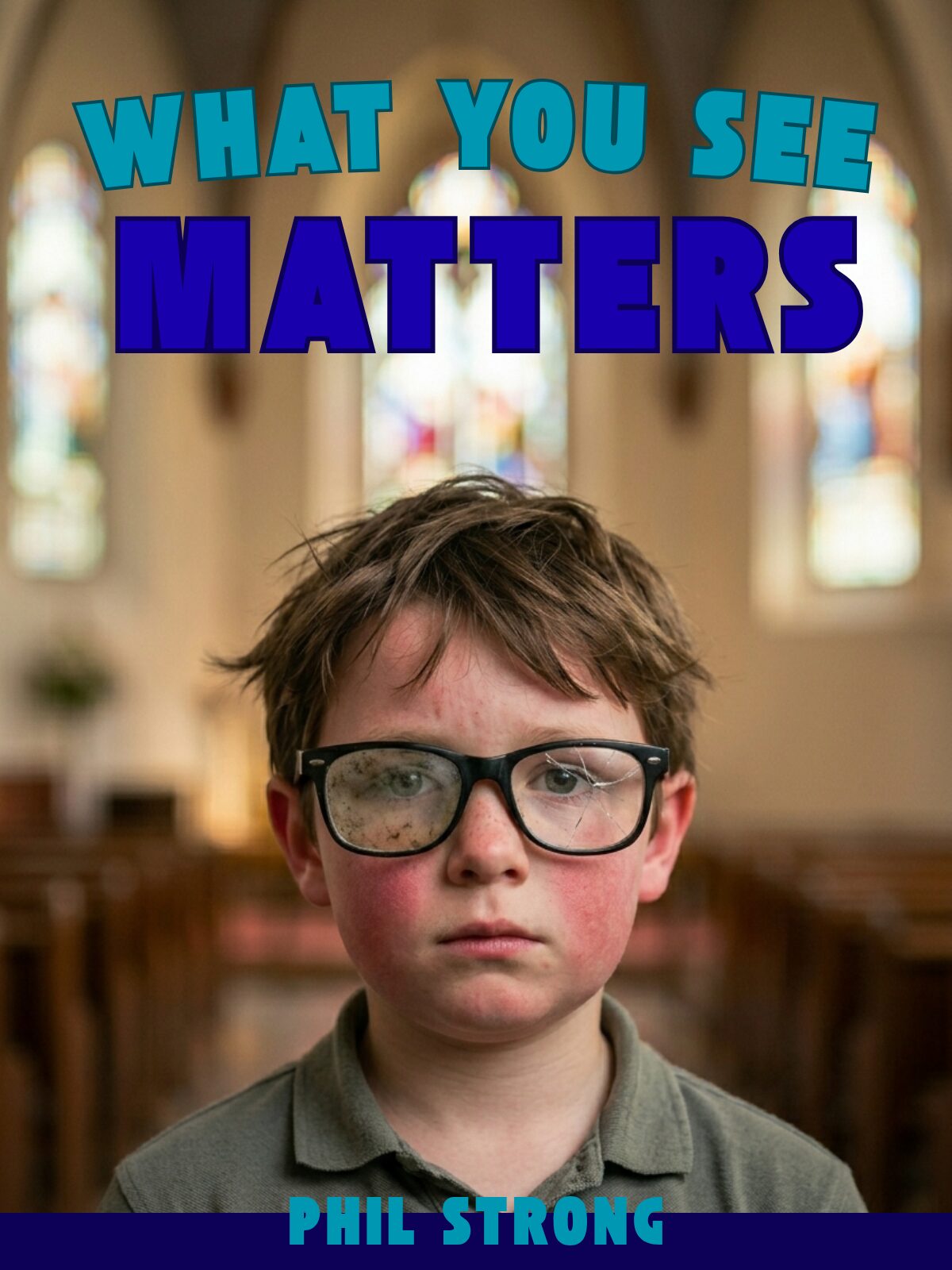
Chapter 3 of What You See Matters unpacks what that actually looks like — strength arriving at the moment you’re most depleted, provision appearing when you couldn’t see a way, protection you only understand later. And it closes with a sentence that I think will stay with you: the staircase always had a name. It just took centuries to be spoken out loud.
📖 What You See Matters is available now. Grab your copy and start seeing differently.
If you could design the kind of person God shows up for, Jacob wouldn’t make the shortlist.
He’s a schemer. A deceiver. A man whose name literally means ‘the one who trips you up’ — which, honestly, is a pretty accurate job description for most of his early life. He talked his hungry twin out of his birthright for a bowl of stew. He dressed up in borrowed clothes to trick his elderly, nearly-blind father into giving him the blessing that belonged to his brother. His brother — understandably — wanted him dead.
And then God showed up. Not after Jacob sorted himself out. Not when he’d learned his lesson. Not at the end of a period of moral reform and spiritual preparation. In the middle of nowhere, while Jacob was sleeping on a rock, on the run from his consequences, with no home and no plan and no idea what came next.
God showed up anyway.
That’s the story in Genesis 28, and I want you to sit with it for a moment before we move on — because this is the pattern that runs through the whole Bible, and it has enormous implications for how you understand your own story.
God has a habit of showing up to the unqualified. Moses was a murderer with a speech impediment when God called him from a burning bush. Gideon was hiding in a winepress from his enemies when the angel arrived and called him a mighty warrior. David was so unlikely a choice that his father didn’t even bother to bring him in when Samuel came to anoint a king.
None of them were ready. None of them would have made the list if the decision had been ours to make.
And yet. God showed up.
Chapter 2 of What You See Matters lives in Jacob’s story — in the in-between space where he finds himself, the extraordinary vision he has in that unnamed place, and the promise God makes to a man sleeping on a rock that he will not leave until he has done everything he said he would.
I will not leave you until I have done what I have spoken to you.
Not a conditional promise. Not ‘if you behave.’ A declaration from a God who finishes what he starts.
Whatever your in-between looks like right now — between the job you had and the one you’re hoping for, between the relationship that ended and the one you can’t quite imagine yet, between the version of faith you grew up with and whatever comes next — Jacob’s story says: this is exactly where God meets people.
Not on the other side of the in-between. Right here. Right now.
In the middle of the uncertain, unresolved, uncomfortable middle.
What You See Matters — because sometimes the rock you’re sleeping on is the very place heaven opens.
📖 What You See Matters is available now. Grab your copy and start seeing differently.
We spend a lot of our lives functioning with blurry spiritual vision — not totally blind, just foggy. We believe. We show up. We do the thing. But there’s a soft-focus quality to how we see God, how we see ourselves, how we see what’s actually possible. We’re seeing through something that’s getting in the way, and half the time we don’t even notice.
The Apostle Paul noticed. He prayed one of the strangest prayers in the entire New Testament — strange because of what he didn’t pray for. No healing. No money. No breakthrough circumstances. What he asked for, for the people he loved, was sight. Spiritual sight. ‘The eyes of your understanding being enlightened,’ he wrote in Ephesians 1. Not more information. Not a better commentary. Actually seeing.
Because Paul understood something we often miss: you can know all the right things about God and still be spiritually short-sighted. The Pharisees had the whole Torah memorised. They still didn’t recognise Jesus when he was standing right in front of them.
The first chapter of What You See Matters asks an honest question: what’s your spiritual sight actually like right now? Not what you wish it was. What it is. Foggy? Clear in some places, blurry in others? And what’s getting in the way?
It also introduces the two stories that are going to carry us through the whole book — a man in Genesis who had a rock for a pillow and no idea that God was about to show up, and a man in a garden in Jerusalem who prayed so hard that his sweat turned to blood.
Two encounters. Two revelations. And a question at the end that might just change the way you pray forever.
But we’ll get to that. First, let’s talk about perspective.
What You See Matters — because what you see shapes how you live. And I think, by the time we’re done, you’ll know exactly what I mean by that.
📖 What You See Matters is available now. Grab your copy and start seeing differently.
Today I want to introduce you to an imaginary friend. But not the kind you had as a child—the invisible companion who joined you for tea parties or sat beside you in the car. No, this imaginary friend is far more dangerous because millions of people believe she’s real. Her name is Veronica, and the question “Who the heck is Veronica?” might just become the most important tool you’ll ever use in your spiritual journey.
Let me start with how this question came to be.
A Hill, A Statue, and A Very Good Question
My wife Kathy and I were celebrating our 29th wedding anniversary with a romantic getaway to Paraparaumu, a beautiful coastal town in New Zealand. We were staying near the beach, and from our accommodation—specifically from our bathroom window—we could see something remarkable on the hilltop: a twelve-metre-tall statue of Mary, the mother of Jesus, illuminated at night with a glowing halo of lights.
On a beautiful Sunday afternoon, we decided to climb the hill to visit this impressive monument. The pathway had been carefully prepared as a devotional walk featuring the Stations of the Cross—a Catholic practice that commemorates Jesus’s final journey to Calvary. As we walked hand in hand up the hill (remember, I was being especially well-behaved given the anniversary), we came upon various monuments marking each station.
Then we reached Station Six.
There, on a plaque, was a tribute to someone named Veronica. Kathy turned to me with genuine curiosity and asked, “Who the heck is Veronica?”
Now, for a brief moment, you might think she was checking whether I had a girlfriend on the side. But I can assure you, I’m far too old and far too tired to have a girlfriend. Besides, I much prefer the one I already have! No, this was a different kind of question entirely—one that would spark what you’re reading right now.
The Legend of the Veil
So who is this Veronica person? Let me tell you what I discovered.
According to Catholic tradition, Veronica was a compassionate woman who encountered Jesus as He carried His cross through the streets of Jerusalem toward Golgotha. Moved by His suffering, she stepped forward from the crowd and offered Him her veil to wipe the blood, sweat, and dirt from His face. When Jesus handed the cloth back to her, His image had been miraculously imprinted upon it—a perfect impression of His holy face, captured in that moment of agonising sacrifice.
It’s a beautiful, moving story. The kind that inspires devotion and compassion. The act itself—reaching out to comfort someone in their darkest moment—reflects the heart of Christ’s own teaching about mercy and love.
The presence of this relic can be traced back to at least the 14th century, with references to a chapel dedicated to Saint Veronica existing as early as the eighth century. The story became enshrined as the sixth Station of the Cross, wherein Saint Veronica encounters Jesus along the Via Dolorosa and wipes His face with her veil. For centuries, pilgrims have venerated this cloth, which reportedly resides among the treasures of the Church in Rome.
The name “Veronica” itself is fascinating—it’s a Latin alteration of the name Berenice, but its spelling was influenced by the ecclesiastical Latin phrase “vera icon,” meaning “true image”. Some scholars suggest that the cloth bearing Jesus’s image was originally known as the “vera icon” (true image), and this name for the relic was later misinterpreted as the name of a saint. Whether the woman created the name or the name created the woman is a question that brings us to the heart of our problem.
The Problem: She’s Not in the Bible
Here’s what you need to know, and why I’m giving you this story as a tool: In all my years of reading the Gospels—Matthew, Mark, Luke, and John—in all my study of the accounts of Jesus’s life, death, and resurrection, in all the eyewitness testimonies recorded in Scripture about His journey to the cross, I have never, ever encountered anyone named Veronica.
Not once.
Not even a hint of her.
The Gospels tell us about Simon of Cyrene, who was compelled to carry Jesus’s cross. They describe the weeping women of Jerusalem whom Jesus addressed. They record the soldiers, the crowds, the mockers, and the mourners. But nowhere—absolutely nowhere—does Scripture mention a woman who wiped Jesus’s face with a veil and received His image upon it.
This doesn’t mean the story isn’t inspiring. It doesn’t mean we should mock or dismiss those who find spiritual meaning in it. What it means is that we must acknowledge a crucial distinction: this is tradition, not Scripture. It’s a story that developed centuries after the events it claims to describe, passed down through legend and eventually formalised into religious practice.
And that distinction matters more than you might think.
A Tool for Your Journey
Let me be clear about why I’m sharing this with you. I’m not interested in tearing down Catholic tradition or anyone’s faith expression. I have deep respect for believers across all denominations who genuinely love Jesus and seek to honour Him. What I am interested in is giving you a tool—a question you can use throughout your life to distinguish between what’s true according to God’s Word and what’s true according to human tradition.
That question is simply this: “Who the heck is Veronica?”
Say it out loud with me now: “Who the heck is Veronica?”
This question becomes your checkpoint, your white flag, your moment to pause and ask yourself: “What am I believing? Is this based on Scripture, or is this based on tradition, culture, or personal experience?”
The Clarkie Test
Let me give you another example of how this kind of gentle questioning works. Years ago, I worked with a wonderful couple—Denis and Coralie Clark. At the end of a week, we would sit together and debrief: celebrating wins, discussing challenges, and dreaming about the future.
Clarkie (as everyone called Denis) was bold and passionate. He would often burst out with grand announcements, decisive declarations, or exciting aspirations. And without missing a beat, his wife Coralie would look at him and ask, “Clarkie, is that what we think?”
It was brilliant. She wasn’t attacking him or putting him down. She was waving a white flag—a safe way to check in, to challenge an idea without challenging the person. She was asking, in essence, “Are you sure about this? Have you thought it through? Is this really true, or is this just how you’re feeling right now?”
That’s exactly what “Who the heck is Veronica?” does for us. It’s a gentle but essential question that helps us examine our beliefs without defensiveness or shame.
Little T Truth vs. Capital T Truth
Here’s the framework that will help you understand why this matters so much.
Many of us carry what I call “little t” truths—beliefs that are true for us, that feel true based on our experience, upbringing, or cultural context. These might include things like:
“God only blesses me when I’m successful.”
“I have to work harder to earn God’s love.”
“Bad things happen to me because I’ve sinned.”
“Real Christians never struggle with doubt.”
“If my prayers aren’t answered the way I want, God doesn’t care.”
These “little t” truths shape our behaviour, inform our decisions, and influence how we relate to God and others. The problem? They’re often wrong.
In contrast, there’s “capital T” Truth—the unchanging, unshakeable, eternally reliable Truth of God’s Word. This is what Scripture reveals about who God is, who we are, and how we’re meant to live. It’s infallible. It withstands every test. It remains the same yesterday, today, and forever.
The tragedy is that too many believers—good, sincere, faithful people—build their lives on “little t” truths instead of “capital T” Truth. They end up on the wrong path, carrying burdens God never intended them to bear, missing the freedom that Jesus died to give them.
Veronica is a perfect example. She represents something that feels spiritual, looks religious, and has been practiced for centuries. But she’s not in the Bible. She’s a “little t” truth—true in the sense that the tradition exists, but not true according to the only source that can be fully trusted: Scripture.
Why This Matters for You
You might be thinking, “Okay, so Veronica isn’t in the Bible. So what? I’m not Catholic. This doesn’t apply to me.”
But here’s what I’ve learned in decades of pastoral ministry: we all have Veronicas in our lives. We all carry beliefs, practices, and assumptions that seem true but aren’t actually based on God’s Word. These might be things we learned in childhood, absorbed from our church culture, or picked up from well-meaning Christians who themselves were operating on “little t” truths.
And if we don’t confront these false beliefs, several things will happen:
We’ll end up on the wrong path. Instead of walking in the freedom Christ offers, we’ll trudge along under burdens He never intended us to carry.
We’ll miss the best God has for us. Like climbing a hill to worship Mary when we could be encountering Jesus, our spiritual energy gets directed toward things that can’t actually satisfy or save.
We’ll pass these false beliefs to the next generation. Our children and grandchildren will inherit our “little t” truths, and they’ll struggle under the same bondage we experienced.
This is why asking “Who the heck is Veronica?” is so vital. It’s not about being critical or cynical. It’s about being discerning. It’s about valuing truth enough to examine what we believe and making sure it aligns with Scripture.
Modern Veronicas
Let me bring this closer to home with some contemporary examples.
The Social Media Veronica:
How many times have you seen something shared online that claims to be Christian truth, only to discover later that it’s misquoted, taken out of context, or completely fabricated? “God said it, I believe it, that settles it”—except God didn’t actually say what’s being attributed to Him.
The Prosperity Gospel Veronica:
The teaching that God rewards faithful Christians with health, wealth, and success—a “little t” truth that sounds appealing but crumbles under biblical examination. Tell that to the apostle Paul, who experienced shipwrecks, beatings, and imprisonment.
The Performance Veronica:
The belief that you have to do certain things, act a certain way, or achieve certain standards to earn God’s approval. This is perhaps the most common Veronica in modern Christianity, despite Scripture’s clear teaching about grace.
The Comparison Veronica:
The idea that your faith journey should look like someone else’s—that you should have the same experiences, feel the same emotions, or express your devotion in the same ways.
Each of these represents a “little t” truth that many sincere believers hold. Each one can lead us away from the pure, liberating Truth of the Gospel.
An Invitation to Freedom
As we begin this journey together through this book, I want you to know that my goal isn’t to destroy your faith or make you suspicious of everything. Rather, I want to invite you into greater freedom—the kind of freedom that comes from building your life on solid rock rather than shifting sand.
Jesus Himself dealt with this issue constantly. The Pharisees were full of “little t” truths—traditions and interpretations that had been passed down for generations, treated as equal to (or sometimes more important than) Scripture itself. Jesus challenged them repeatedly, pointing them back to God’s actual Word rather than human additions to it.
In the chapters ahead, we’re going to look at biblical examples of people who held false beliefs and see what happened when they did—or didn’t—let go of them. We’ll explore practical ways to identify the “Veronicas” in your own life. We’ll discover how humility becomes the key to freedom, and we’ll learn a simple but powerful process for replacing “little t” truths with “capital T” Truth.
But it all starts here, with a simple question: “Who the heck is Veronica?”
Your First Exercise
Before you move on to the next chapter, I want you to take some time for reflection. This isn’t busy work—it’s the beginning of your journey toward freedom.
Journal Prompt:
Write down three beliefs about God, yourself, or the Christian life that you’ve held for as long as you can remember. Don’t filter or judge them yet—just write them down.
Do you want to dive deeper?
I’ve prepared a 10-week, 7-day devotional guide especially for for you!
Click this link and to check out the comprehensive Devotional Guide for walking in freedom. Beyond Veronica is available for you to pre-order.
Prayer Prompt:
“Father God, I’m willing to examine what I believe. I’m willing to let go of anything that isn’t true according to Your Word. Would You show me if there’s a ‘Veronica’ in my life—something I’ve been treating as Truth that isn’t actually in Your Word? Give me courage to see it and humility to release it. I want to build my life on Your Truth alone.”
Looking Ahead
In the second chapter, we’re going to develop this framework of “little t” versus “capital T” truth more fully. We’ll look at how false beliefs gain power in our lives and why they’re so hard to let go of. We’ll also begin to explore the biblical principle that changes everything: what we agree with, we give power to.
But for now, let the question settle into your heart: “Who the heck is Veronica?”
It’s a question that might just set you free.
—
“Then you will know the truth, and the truth will set you free.” — John 8:32
—
A Final Word
I want to be clear: my heart toward anyone who venerates Veronica or participates in the Stations of the Cross is one of respect and love. These practices have brought comfort and inspired compassion in millions of believers over centuries. The devotion is real, the hearts are sincere, and God works in mysterious ways.
But sincerity doesn’t equal accuracy. And when we’re talking about building a foundation for our faith—something we’ll stake our lives on, something we’ll pass on to our children—we need to make sure we’re building on the Word of God, not the traditions of men.
That’s not judgment. That’s just wisdom.
And it’s wisdom that applies to all of us, regardless of our denominational background. We all have our “Veronicas”—the beliefs and practices we’ve inherited that need to be examined in the light of Scripture.
So let’s examine them together.
Let’s ask the hard questions.
Let’s be willing to let go of what isn’t true so we can grab hold of what is.
Let’s find out who the heck Veronica really is—and what we should do about her.
Are you ready?
Then let’s begin.
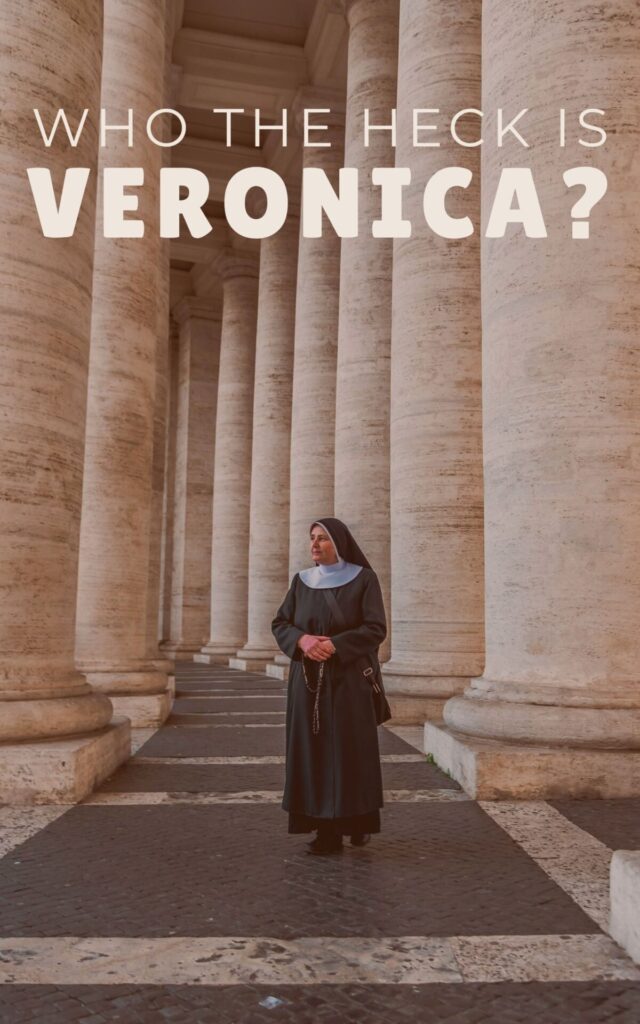
Click the image below to get your copy of this book.
If you’ve ever felt like you’re doing everything “right” as a Christian but still feeling exhausted, anxious, and not good enough… you’re not alone.
You show up at church. You serve faithfully. You read your Bible and pray. You’re trying so hard to measure up, to earn God’s approval, to be spiritual enough.
But here’s what no one tells you: You might be building your entire spiritual life on beliefs that aren’t actually in the Bible.
I call them “little t” truths—beliefs that feel right, sound spiritual, and might even be taught in church… but aren’t found in Scripture. And they’re keeping you in bondage.
How do I know? Because I’ve spent decades counseling believers who are carrying crushing burdens God never intended them to bear.
Like the woman who believed: “God only loves me when I’m useful” Or the man convinced: “I must work harder to earn God’s favor” Or the teen who thinks: “If I’m struggling, I must not have real faith”
None of those beliefs are biblical. But they’re powerful because they’ve been reinforced by experience, culture, or well-meaning Christians who themselves believed lies.
That’s where Veronica comes in.
Veronica is a legend—a woman who supposedly wiped Jesus’s face on the way to Calvary. It’s beautiful. It’s inspiring. It’s taught in Catholic tradition.
And she’s not in the Bible.
Not once. Not in any Gospel. She’s a “little t” truth—true in the sense that the legend exists, but not true according to Scripture.
And here’s the question that will change your life:“Who the heck is Veronica?”
It’s a tool. A checkpoint. A way to examine what you believe and ask: Is this actually in God’s Word, or is this tradition, culture, experience, or assumption?
In this book, you’ll:
Learn the difference between “little t” and “capital T” Truth
Discover the Five R’s process for replacing lies with Scripture
Explore biblical stories (Naaman’s pride, Gehazi’s greed) that mirror your struggles
Identify false beliefs causing anxiety, shame, and spiritual exhaustion
Break generational patterns affecting your children
Find practical tools for living in freedom instead of performance
This isn’t theory. It’s transformation.
This isn’t just information. It’s invitation—to question what you’ve believed, test it against Scripture, and experience the freedom Jesus died to give you.
Whether you’re:
A teen drowning in social pressure about identity and worth
A parent exhausted from trying to be “good enough”
A church leader helping others find freedom
A believer who’s done all the “right things” but still feels empty
…this book is your roadmap.
Because true faith isn’t built on legends, traditions, or what you’ve always heard.
It’s anchored in the unchanging, unshakeable Truth of God’s Word.
Stop climbing the wrong hill. Discover who Veronica really is—and what you should do about her.
Are you building your faith on lies disguised as truth?
Most Christians carry beliefs that feel spiritual, sound biblical, and have been practiced for generations—but aren’t actually in Scripture. These “little t” truths keep you in bondage while “capital T” Truth sets you free.
What if the beliefs holding you back aren’t even in the Bible?
Drawing from the legend of Veronica—a woman Catholic tradition says wiped Jesus’s face on the cross, yet appears in zero Gospels—this book teaches you to ask: “Who the heck is Veronica?”
It’s a checkpoint. A white flag. A tool for questioning inherited beliefs, cultural Christianity, and personal assumptions that masquerade as biblical truth.
WHAT YOU’LL LEARN:
✓ Biblical Discernment – Distinguish “little t” truths (personal beliefs) from “capital T” Truth (Scripture) ✓ The Five R’s Process – Practical steps to identify lies and replace them with biblical truth ✓ Naaman’s Story – How pride and false beliefs nearly cost him his miracle ✓ Gehazi’s Warning – Why greed and worldly values curse future generations ✓ Modern Applications – From prosperity gospel to hustle culture to social media myths ✓ Emotional Signposts – Using feelings to identify hidden false beliefs ✓ Generational Impact – Breaking cycles of shame, performance, and spiritual bondage ✓ Freedom Framework – Moving from anxiety to peace, performing to resting, striving to trusting
KEYWORDS: Christian living, spiritual freedom, biblical truth, false beliefs, generational healing, faith and doubt, Christian discipleship, spiritual growth, biblical teaching, freedom in Christ, Christian identity, overcoming shame, performance-based faith, prosperity gospel critique, spiritual bondage, Christian self-help
WHO THIS BOOK IS FOR:
Christians feeling exhausted by performance-based faith
Teens navigating identity, worth, and cultural pressure
Parents wanting to break unhealthy spiritual patterns
Church leaders helping others find freedom
Anyone carrying shame, anxiety, or “never good enough” beliefs
Believers wanting to build faith on Scripture, not tradition
WHAT MAKES THIS DIFFERENT:
Unlike generic “Christian living” books, Who the Heck is Veronica? provides:
A memorable tool (the Veronica question) you’ll use for life
Modern analogies connecting ancient truth to current culture
A legacy focus—breaking cycles for your children
THE PROMISE:
By the end of this book, you’ll know how to identify false beliefs, test them against Scripture, and replace them with truth that genuinely sets you free.
Picture this: You’re climbing a hill on a beautiful Sunday afternoon, following a devotional path marked by monuments and plaques. Suddenly, you encounter Station Six—a tribute to Veronica, the woman who wiped Jesus’s face on the way to Calvary.
It’s moving. It’s beautiful. It’s inspirational.
There’s just one problem: She’s not in the Bible.
Not in Matthew, Mark, Luke, or John. Nowhere in Scripture. She’s a legend that became tradition, a story that feels true but isn’t found in God’s Word.
And here’s the uncomfortable question: What else are you believing that isn’t actually biblical?
In a world flooded with spiritual shortcuts, feel-good myths, and cultural Christianity, Who the Heck is Veronica? invites you on a transformative journey to unmask the “false truths” that quietly sabotage your faith.
You’ll discover:
The powerful difference between “little t” truths (personal beliefs that feel right) and “capital T” Truth (unchanging biblical reality)
Why you’re exhausted from performing for God’s approval—and how to rest in grace instead
How Naaman’s pride nearly cost him his healing (and what we can learn from his humility)
Why Gehazi’s greed didn’t just destroy him—it cursed his descendants for generations
The Five R’s process: Renounce, Repent, Remove, Replace, Rehearse—your practical path to freedom
How your unaddressed lies become your children’s inheritance
This book is for:
Teens navigating social media myths and peer pressure about identity and worth
Adults carrying beliefs like “I must work harder to be loved” or “God is disappointed in me”
Parents wanting to break generational patterns of shame, performance, or fear
Church leaders helping others distinguish between tradition and Scripture
Anyone who’s done all the “right” Christian things but still feels in bondage
Through biblical exposition, modern analogies (from hustle culture to confirmation bias), and introspective exercises, you’ll learn to question what you believe, test it against Scripture, and replace comfortable lies with liberating Truth.
The stakes are high: Your false beliefs don’t just affect you—they shape your legacy, influence your community, and model faith for the next generation.
If you’re ready to:
Trade illusions for intimacy with God
Stop performing and start resting in grace
Break free from anxiety, shame, and spiritual exhaustion
Build your life on solid rock instead of shifting sand
…then this is your wake-up call.
Because true faith isn’t built on legends. It’s anchored in the living, breathing Word of God.
Discover who Veronica really is—and what you should do about her.
Phil Strong’s latest title available for you here. (click the image to read more)
Have you ever wondered why your faith feels more like a burden than freedom?
You’re serving faithfully. Reading your Bible. Attending church. Doing all the “right” things. Yet you’re exhausted, anxious, and secretly wondering if you’re good enough for God.
Here’s the truth: You might be building your spiritual life on beliefs that aren’t actually in Scripture—”little t” truths that feel right but lead you away from the freedom Christ died to give you.
Drawing from the intriguing Catholic legend of Veronica—a compassionate woman whose story isn’t found in any Gospel—this book gives you a powerful question to ask yourself: “Who the heck is Veronica?” It’s a tool for identifying false beliefs, challenging inherited traditions, and replacing lies with biblical Truth.
Through riveting biblical stories (like Naaman’s pride and Gehazi’s greed), practical exercises, and raw self-reflection prompts, you’ll learn to:
Distinguish between “little t” truths and “capital T” Truth
Identify false beliefs causing anxiety, shame, and spiritual bondage
Apply the Five R’s process to replace lies with Scripture
Break generational patterns affecting your children and grandchildren
Live authentically in Christ’s grace without performance pressure
Whether you’re a teen navigating peer pressure or an adult wrestling with doubt, this isn’t just a read—it’s a roadmap to freedom, humility, and legacy.
Stop climbing the wrong hill. Discover how letting go of your “Veronicas” can lead to healing and empower you to live in the Truth that actually sets you free.
True faith isn’t built on legends—it’s anchored in the living Word.
NEW BOOK RELEASING SOON!
Get it from my shelf to yours. Click the image below to read more.
Have you ever felt like God packed His bags and left? Like your prayers are bouncing off the ceiling? You’re not alone—and you’re not abandoned.
When life falls apart, our first instinct is to interpret silence as absence. But Psalm 34:18 flips that script entirely: “The Lord is close to the brokenhearted and saves those who are crushed in spirit.” Notice it doesn’t say He might come close or He’s thinking about showing up. It says He is close—present tense, guaranteed proximity.
Why Hardship Feels Like Abandonment
Our emotions aren’t always reliable theologians. When we’re drowning in grief, loss, or disappointment, it’s natural to feel isolated. But here’s the truth bomb: God’s nearness isn’t dependent on your ability to feel it.
Think about it like standing in a dark room. The walls didn’t disappear just because you can’t see them. Similarly, God’s presence doesn’t evaporate during your darkest seasons—your spiritual eyes just need time to adjust.
The Hindsight Gift
Looking back on painful seasons, how many times have you seen God’s fingerprints all over moments that felt God-forsaken at the time? That’s the ministry of hindsight—it reveals that helplessness was actually an invitation to deeper intimacy.
When you’re too weak to carry yourself, that’s when you discover God’s been carrying you all along.
Practical Steps Forward
Stop interpreting emotions as evidence. Feelings are real, but they’re not always reliable narrators of truth.
Anchor to Scripture, not circumstances. Psalm 34:18 is a promise, regardless of what your day looks like.
Talk to God honestly. He can handle your anger, confusion, and questions.
“As iron sharpens iron, so one person sharpens another.” – Proverbs 27:17
We’ve reached the final principle in staying strong, but in many ways, this is where the real adventure begins. Everything we’ve explored—strengthening ourselves in the Lord, holding onto His promises, taking meaningful action—all of these disciplines find their ultimate expression when we grow together with others.
The writer of Proverbs understood something profound: we become our best selves not in isolation, but in community. When iron strikes iron, sparks fly and both pieces become sharper, more effective, more ready for their intended purpose.
The Aquila and Priscilla Partnership
In my book Stay Strong, I explore the remarkable partnership of Aquila and Priscilla—one of Scripture’s most beautiful examples of growing together. This married couple appears throughout the New Testament as a powerful team that demonstrates how healthy spiritual partnership transforms not just individuals, but entire communities.
When they encountered Apollos—a gifted speaker with incomplete understanding of Jesus—they didn’t publicly correct him. Instead, “they invited him to their home and explained to him the way of God more adequately.” Their friendship created a safe space for growth.
Paul later wrote about them: “They risked their lives for me. Not only I but all the churches of the Gentiles are grateful to them.” Their commitment to growing together benefited not just themselves, but entire communities of believers.
The Anatomy of Spiritual Sharpening
Think about what happens when a blacksmith sharpens a blade. The process involves friction, heat, and intentional contact between two hard surfaces. It’s not always comfortable, but it’s necessary for effectiveness.
Similarly, when we allow others to speak into our lives, to challenge our thinking, and to hold us accountable, we become more effective in our calling.
What does healthy “iron sharpening iron” look like? These are people who:
Love you enough to tell you the truth, even when it’s difficult
Celebrate your victories without jealousy and support your failures without judgment
Challenge you to grow and refuse to let you settle for mediocrity
Sometimes simply sit with you without trying to fix everything
Finding Your Growth Partners
Not every relationship provides the healthy friction that leads to growth. Some relationships dull our edge rather than sharpen it. The key is identifying and cultivating relationships that truly help us become better.
Look for people who demonstrate these characteristics:
Integrity: They’re committed to their own spiritual growth
Courage: They love you enough to speak truth into your life
Loyalty: They celebrate your victories and support you through struggles
Don’t be afraid to assess your current relationships honestly. As I’ve told my kids: “You become like who you hang out with.” Sometimes you need to quietly and politely shift toward more constructive relationships.
The Multiplication Effect
One of the most exciting aspects of growing together is how it multiplies beyond our immediate relationships. When Aquila and Priscilla invested in Apollos, they weren’t just helping one person—they were investing in everyone Apollos would eventually influence.
Your commitment to growing together isn’t just about personal development—it’s about God’s larger purposes. Every relationship that helps you grow closer to Christ increases your capacity to help others do the same.
As you stay strong in this season, remember: God has incredible things planned for you and the communities you’re part of. Find your people. Be someone’s iron. Create communities where growth is expected and celebrated.
GRAB PHIL’S LATEST BOOK:
Ready to discover how biblical heroes found unshakeable strength in surrender? Order Stay Strong now and learn the timeless secrets of spiritual resilience that can transform your overwhelming circumstances into testimonies of God’s faithfulness.